


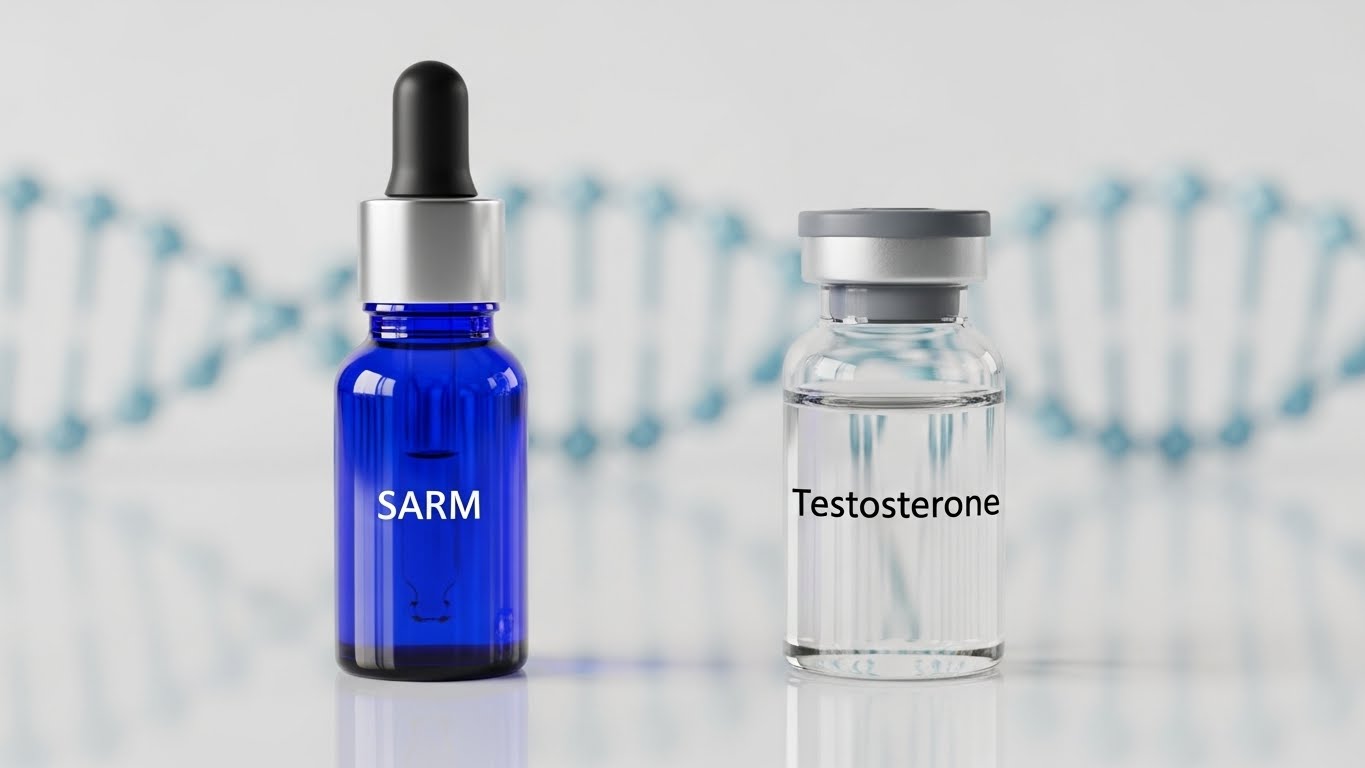
In the Canadian fitness community, the debate between Selective Androgen Receptor Modulators (SARMs) and Anabolic-Androgenic Steroids (AAS) is often framed as a choice between “modern science” and “traditional power.” While both interact with androgen receptors to promote muscle growth, their legal status and safety profiles in Canada differ significantly.
Anabolic steroids are more effective for total muscle mass but carry a higher risk of systemic side effects and are strictly regulated as Schedule IV substances in Canada. SARMs are often marketed as “side-effect free” alternatives; however, Health Canada classifies them as unauthorized drugs that have not been vetted for safety. Clinical data suggests that many SARMs sold in Canada are either under-dosed or adulterated with oral steroids, making “safety” a significant concern for both categories.
Understanding the biological “mind map” of these substances helps explain their different impacts on the body.
[Steroids] are synthetic derivatives of testosterone. They bind to androgen receptors throughout the entire body including the heart, prostate, and scalp, which leads to both muscle growth and widespread side effects.
SARMs are designed to be tissue-selective. In theory, they target androgen receptors specifically in muscle and bone tissue while avoiding the prostate and sebaceous glands. However, most modern SARMs (like LGD-4033 or RAD-140) still exhibit some level of systemic suppression.
Feature | Anabolic Steroids (AAS) | SARMs |
Anabolic Potency | Extreme (High) | Moderate |
Delivery Method | Mostly Injectable | Mostly Oral (Liquid/Capsule) |
Legal Status (Canada) | Schedule IV (Prescription) | Unauthorized (Illegal to sell) |
Health Canada Vetted | Yes (DIN-labeled only) | No |
HPTA Suppression | Severe (Requires PCT) | Mild to Moderate |
Liver Toxicity | High (Orals) / Low (Injectables) | Variable (Often high in UGLs) |
It is a common misconception that SARMs are “legal” in Canada because they are often sold as “research chemicals.”
[Health Canada] does [not authorize] the [sale of SARMs] for human consumption. While some companies sell them under the guise of “not for human use,” the Food and Drugs Act allows regulators to seize these products if they are being marketed or used as health products.
As discussed in our Canada Steroids guide, the primary risk for Canadians is the source of the substance.
A major myth in the SARM community is that “you don’t need a PCT.”