Blood Work as Your Personal QC Lab
The use of unregulated Testosterone Cypionate means you forfeit all pharmacy-grade QC. The only way to verify what a product is doing to your body and, critically, to manage risk, is through regular blood testing.
Blood work serves two primary functions in this context:
- Safety Assurance: Identifying critical, life-threatening risks like high Hematocrit (clot risk) and compromised Lipid Profiles (cardiovascular risk).
- Dose Management: Verifying that your dosage schedule is maintaining stable hormonal levels (Total T, E2) without excessive peaks or troughs.
Ignoring blood work transforms a controlled risk management process into a dangerous gamble. This guide breaks down the six core markers you must monitor and the specific risks each one controls.
Learn more about testosterone with our ultimate Canadian TRT guide
Core Panel Components: Hormonal Balance and Effectiveness
These markers confirm your hormone levels are in a safe, effective range and are essential for tailoring dosage.
1. Total Testosterone (TT)
This is the sum of all testosterone in your blood: Free T (active) and Bound T (inactive).
- What It Tells You: It confirms the product you are injecting is functional and at roughly the stated concentration.
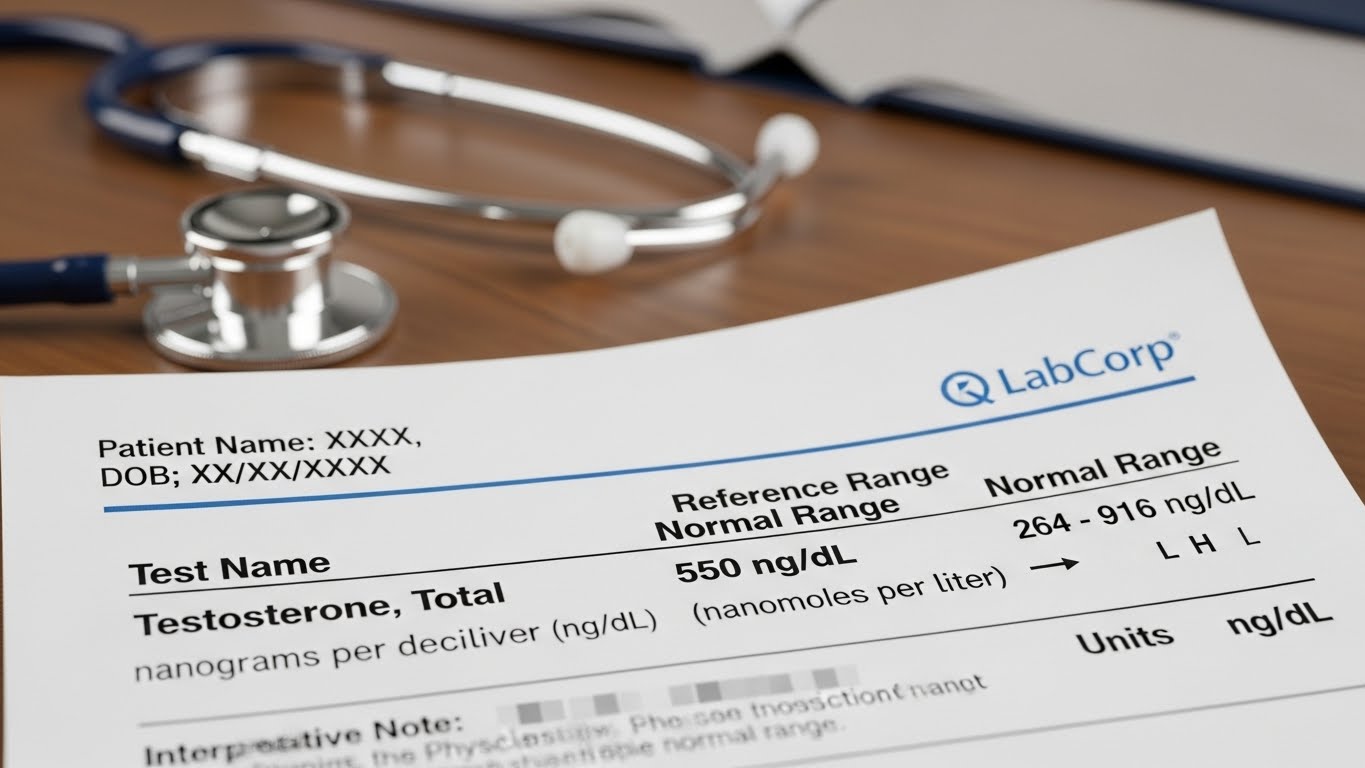
- Target Range: For high-end physiological use, the clinical target is usually 9.7–25nmol/L (Canadian guidelines), but many users aim slightly higher. The key is to avoid excessive supraphysiological levels (e.g., 100nmol/L), which increase cardiovascular risk.
- Critical Timing: Always draw blood at the trough (just before your next scheduled injection) or the mid-point of your dosing schedule. Testing immediately after an injection only gives a meaningless “peak” reading.
2. Sex Hormone Binding Globulin (SHBG)
SHBG is a protein produced by the liver that binds to testosterone, rendering it inactive. Think of it as a “taxi” that holds T.
- What It Tells You: A low SHBG means more T is free, leading to higher Free T levels but faster clearance and more hormonal fluctuation. A high SHBG holds too much T captive, making you feel symptomatic despite a high Total T.
- Significance: SHBG is often suppressed by exogenous androgens, which is a major reason why Free T can skyrocket even if Total T remains moderate.
3. Free Testosterone (FT)
FT is the active, bioavailable form of the hormone, the amount that can actually bind to receptors in muscle and brain tissue.
- What It Tells You: This is the most accurate measure of hormonal activity. It is calculated from Total T and SHBG.
- The Goal: You want FT to be elevated, but a runaway FT (often caused by suppressed SHBG) can accelerate side effects. Monitoring this ensures the dosage is controlled.
The Mandatory Safety Panel: Risk Mitigation
These markers are non-negotiable for anyone using exogenous hormones, as they detect the two greatest clinical dangers: clotting and estrogen imbalance.
4. Estradiol (E2)
E2 is the primary estrogen in men, created when the enzyme aromatase converts testosterone.
- What It Tells You: Your E2 level dictates your risk of estrogenic side effects, primarily Gynecomastia (breast tissue growth), water retention, and high blood pressure.
- The “Goldilocks” Principle: E2 should not be too high (leading to side effects) or too low (leading to joint pain, mood instability, and low libido). The target is a level that balances the high T, often in the 20-40pg/mL range.
- Mandatory Testing Note: You must request a High-Sensitivity E2 Assay (E2, LC-MS/MS). The standard clinical E2 test is designed for women and is inaccurate for the lower levels found in men. If your E2 is outside the safe range, you need to consult the dedicated guide: Aromatase Inhibitors (AIs) Explained: Controlling Estrogen and E2 Levels
5. Complete Blood Count (CBC) / Hematocrit (HCT)
The CBC measures your red blood cells (RBC), white blood cells (WBC), and platelets. Hematocrit (HCT) is the percentage of blood volume made up of RBCs.
- What It Tells You: Testosterone often increases RBC production, leading to Polycythemia (blood thickening). This is the single biggest cardiovascular risk factor in testosterone use.
- The Danger Zone: The absolute threshold for stopping treatment or intervening is a Hematocrit level of 52% or higher. Thickened blood significantly increases the risk of stroke, heart attack, and DVT (Deep Vein Thrombosis).
Action Plan: If your HCT is approaching 52%, you must consult the specialized guide: Managing Hematocrit & Polycythemia: A Phlebotomy Guide